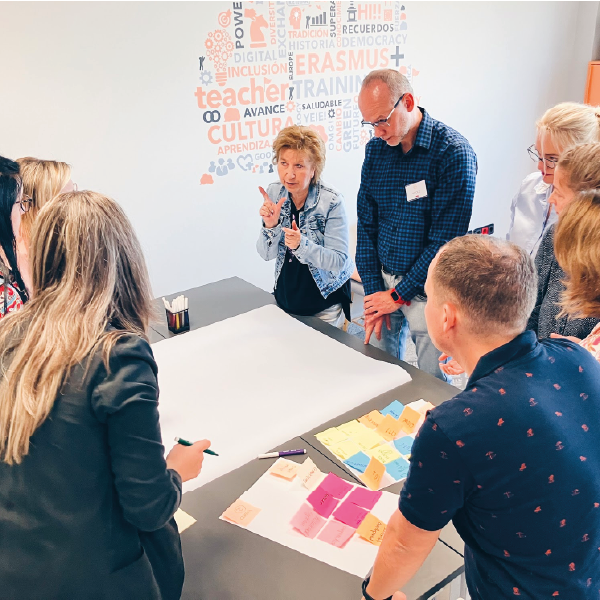
Teaching in Non-Conventional Spaces
About this course
Learning does not have to happen only between four walls and in rows of desks. Corridors, playgrounds, libraries, gardens, museums, public spaces and digital environments can all become powerful places to learn, helping students stay curious, active and engaged. This course shows you how to take your teaching beyond the traditional classroom and use a wide variety of spaces to design engaging, experiential lessons in any subject.
You will explore four types of learning spaces. Within the school, you will learn how to use flexible furniture, corridors, libraries, labs and playgrounds as learning areas. Outdoors, you will see how nature and green spaces can support learning and wellbeing. In the community, you will discover how public spaces, museums, markets and local organisations can become part of your lessons. In digital spaces, you will explore how virtual environments and online tools can extend learning beyond the timetable. Through hands-on activities and real-world examples, you will learn how to plan lessons in each space, manage groups safely and help students connect learning with real life.
By the end of the course, you will have designed your own lessons in non-conventional spaces and a plan to make your school's spaces more flexible and inspiring.
COURSE OVERVIEW
- Integrate non-conventional learning spaces into their teaching in any subject.
- Evaluate the learning value and safety of different spaces and adapt lessons to them.
- Create flexible and inspiring learning environments that support engagement and wellbeing.
- Share ideas for using school, outdoor, community and digital spaces with colleagues.
- Design experiential lessons for school, outdoor, community and digital spaces.
- Organise flexible classroom layouts and use different areas of the school for learning.
- Plan lessons that use public spaces, museums and local organisations.
- Use digital spaces and tools to extend learning beyond the classroom.
- Manage groups safely and effectively outside the traditional classroom.
- Understand how learning spaces influence students' engagement, wellbeing and learning.
- Identify different types of non-conventional learning spaces and their benefits.
- Recognise the principles of experiential learning and how they apply to different spaces.
- Explain how flexible school environments support different ways of learning.
NEXT COURSES
Our Pricing
100% funded by the Erasmus+

Services included
- Pre-arrival information.
- Tuition & training materials.
- Admin & organizational costs.
- Documentation support.
- Coffee break.
*Please check our Terms & Conditions for details of the items included in the Coffee Corner.
services
- Accommodation (hotels & self-catering apartments).
- Half-day and one-day trips.
- Cultural activities.
- Airport transfer.
- Local transport.
We want to read you
Reach out to us using our contact form and we will get back to you shortly.